Marvelous Marten
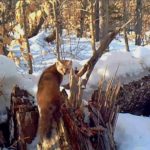
It has been a long time since I’ve posted here, but now that I have a bit more time on my hands, I thought I’d revive this blog and share some of the material I have accumulated over the past … Continue reading →
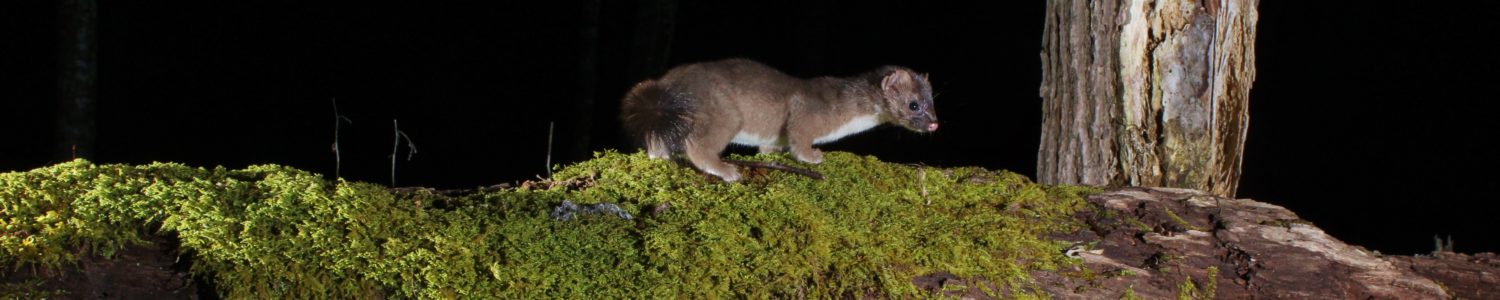
It has been a long time since I’ve posted here, but now that I have a bit more time on my hands, I thought I’d revive this blog and share some of the material I have accumulated over the past … Continue reading →
A deer scrape is a scenting area where the animals scrape their hoofs on the ground and chew, mouth, or nose the end of a thin, low, overhanging branch. They sometimes urinate on the scrape, allowing the urine to run … Continue reading →
I enjoyed giving this camera trapping presentation at the 2016 Northeast Wildlife Trackers Conference. It was wonderful to connect with so many enthusiastic naturalists! Some of the participants at my workshop requested a copy of my slides, so here’s the … Continue reading →
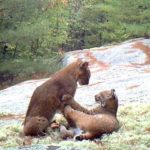
Last summer, one of my cameras captured a series of photos of mother and kitten bobcats playing. I was delighted, but at the same time disappointed that I hadn’t set the camera on video. So I switched it to video … Continue reading →
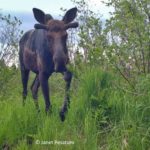
We northwoods snow trackers are so used to seeing sign of moose browsing and incisor scraping on tree and shrubs in winter that we forget about the moose’s summer diet. As is true of many herbivores, the moose’s diet varies … Continue reading →
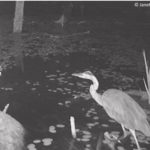
Great blue herons are able to hunt day and night, thanks to their excellent vision. It’s sometimes said that they need bright moonlight for nocturnal hunting, but the high density of rod type receptors in their eyes give them excellent … Continue reading →
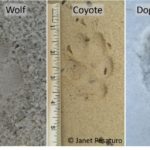
Tracking wolves in Wisconsin this past July was a particularly exciting experience, perhaps because we don’t have wolves here in New England. Or do we? Midwestern wolves and New England coyotes have something in common, and it’s not just that … Continue reading →
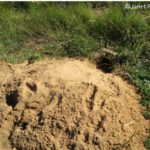
Because their burrows are conspicuous, badgers (Taxidea taxus) are relatively easy to track when you’re in their preferred habitat. They like open landscape, such as prairie, desert scrub, and savanna, with loose, sandy soil. They range throughout the west and … Continue reading →
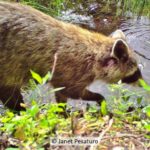
Raccoons (Procyon lotor) are known for their dexterous hands, in comparison to other members of Carnivora, but when compared to other procyonids, they are intermediate in manipulatory ability. Their fingers are incapable of complete flexion over the palm, and their … Continue reading →
Woodchucks (Marmota monax) have sweat glands near the corners of the mouth which emit a pungent odor. The animals are well known to rub their cheeks on trees, roots, and stones near the den, thus depositing their scent. Groundhogs often … Continue reading →