Pronghorn Tracks and Sign
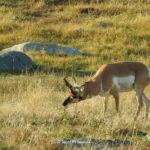
Pronghorn tracks and scat are similar to those of deer, but tracks differ in 2 important ways, and contextual clues help distinguish scat.
Continue reading →
Pronghorn tracks and scat are similar to those of deer, but tracks differ in 2 important ways, and contextual clues help distinguish scat.
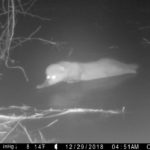
Continue reading →The fisher and its cousin the river otter often create tracks and trail patterns of similar appearance. If tracking conditions are poor and tracks are unclear, distinguishing between these two mustelids can be tricky business. However in snow, otters usually … Continue reading →
One type of productive spot for a trail camera is a pinch point, a place where landscape features force animal travel through a narrow area. The floor of a narrow, steep-walled canyon, a trail through dense vegetation, and a natural … Continue reading →
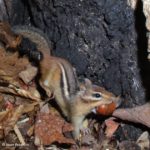
The eastern chipmunk (Tamias striatus) copes with winter by storing food, rather than body fat, and by entering torpor for days at a time, waking up in between to nibble its cache. It begins cycling through torpor only when and … Continue reading →
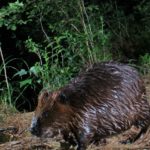
The North American beaver’s winter diet of tree bark is familiar to many, but less well known are its distinct preferences. Generally, it prefers deciduous trees over conifers, but from the beaver’s perspective, not all hardwoods are created equal. The … Continue reading →
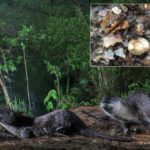
When river otters feed on crayfish, the resultant scat contains pieces of the crayfish exoskeleton, usually reddish in color. If you carefully dissect the scat, you might find something else that came from the crayfish: a small white to pinkish … Continue reading →
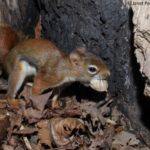
Most people associate red squirrels (Tamiasciurus hudsonicus) with conifers, and while it’s true that they need forest with at least some conifers, they are fairly adaptable omnivores and their diet tends to reflect local abundance. So in Alaska’s boreal forest, … Continue reading →
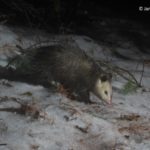
Old Didelphis virginiana is the only marsupial in the US, which sets it apart from the other mammals in the region, but like many of them (raccoon, coyote, skunk, black bear), it is an opportunistic omnivore. That means it can … Continue reading →
About 2 decades ago we moved into our current house which sat in a wide open 1-acre lot, devoid even of foundation plantings. I loved the empty space because I wanted to fill it with my choice of plantings to … Continue reading →
I am excited to announce the upcoming publication of my book, Camera Trapping Guide: Tracks, Sign, and Behavior of Eastern Wildlife. It will be released September 1, 2018, and can be pre-ordered now by clicking here or on the above … Continue reading →