Building a DSLR Camera Trap: Part 1 – Design Elements
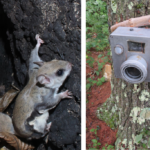
A camera trap based on a DSLR camera can take better photos than standard camera traps. This post describes the key elements in making one.
Continue reading →
A camera trap based on a DSLR camera can take better photos than standard camera traps. This post describes the key elements in making one.
Continue reading →The bobcat (Lynx rufus) is the most successful of North America’s wild felines, and one reason for its success is its diet. Like its cousin the Canada lynx, the bobcat relishes a meal of rabbit or hare, but unlike the … Continue reading →
Often when I camera trap I target some kind of animal sign to get a certain species or even a specific behavior. Some examples from past posts are an otter latrine, a bear marking tree, a woodchuck marking a sapling, … Continue reading →
Many bird species bathe in “dust” (sand or soil) as part of their plumage preening process. The bird prepares a new spot for dust bathing by scraping a patch of dry, fine, loose soil or sand with its feet to … Continue reading →
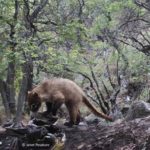
This video is a composite of captures from a trail camera that was stationed for eight months in a canyon in southeastern Arizona. In it you will see coati, ringtail, hog-nosed skunk, hooded skunk, black bear (including 2 different sets … Continue reading →
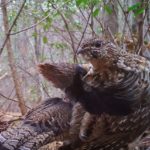
Most birds, the ruffed grouse among them, have a preening gland, also called the uropygial gland, on the rump at the base of the tail. It secretes a rich oil of waxes, fatty acids, fat, and water that is used … Continue reading →
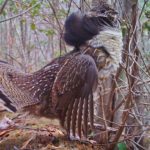
The sound of a male ruffed grouse drumming may be subtle, but the accompanying display is flamboyant. The low pitched drum alerts females in the vicinity to the presence of a male, and if her interest is piqued, she may … Continue reading →
One type of productive spot for a trail camera is a pinch point, a place where landscape features force animal travel through a narrow area. The floor of a narrow, steep-walled canyon, a trail through dense vegetation, and a natural … Continue reading →
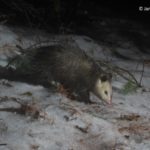
Old Didelphis virginiana is the only marsupial in the US, which sets it apart from the other mammals in the region, but like many of them (raccoon, coyote, skunk, black bear), it is an opportunistic omnivore. That means it can … Continue reading →
About 2 decades ago we moved into our current house which sat in a wide open 1-acre lot, devoid even of foundation plantings. I loved the empty space because I wanted to fill it with my choice of plantings to … Continue reading →