Camera Trapping Bats with an Acoustic Trigger
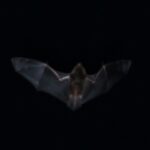
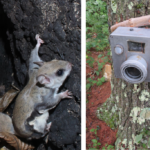
An acoustic trigger is the key to capturing camera trap photos of bats in flight — as close as your backyard
Continue reading →
An acoustic trigger is the key to capturing camera trap photos of bats in flight — as close as your backyard
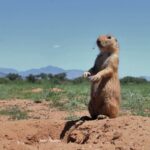
Continue reading →Prairie dogs (Cynomys species) are diurnal, burrowing rodents that eat mostly grasses and small seeds and live in “towns” of multiple family groups. While some scientists quibble about the designation of prairie dogs as keystone species, the argument hinges on … Continue reading →
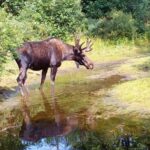
A moose rut pit is a several foot long section of earth, often mud, where a bull has pawed up the soil with front hooves, deposited urine, and splashed urine soaked mud onto his bell and antlers. He may also … Continue reading →
A camera trap based on a DSLR camera can take better photos than standard camera traps. This post describes the key elements in making one.
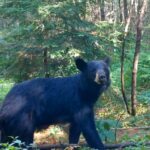
Continue reading →Because clear foot prints are rarely present, the ability to recognize other bear sign is very helpful in tracking bears. A black bear marking trail, also called mark trail, stomp trail or ritual trail, is a series of worn ovals … Continue reading →
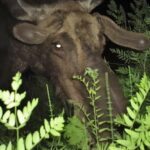
Moose (Alces alces) are known to consume a wide variety of plants, favoring the leaves and twigs of trees and shrubs and aquatic vegetation where available. Ferns are mentioned only occasionally. In his 1934 study of moose diet on Isle … Continue reading →
In a recent post on thermal runaway, I gave the advice of always using “well matched” batteries. One way to do this is to use new batteries, then continue to use these batteries as a set. But this assumes the … Continue reading →
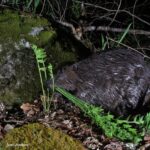
In my first post on this topic, Tree Preferences of the Beaver, I summarized the basics: that beavers (Castor canadensis) prefer most deciduous trees over conifers, that some hardwoods are more desirable than others, that aspen is the all time … Continue reading →
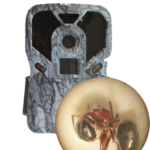
Trail Cameras seem to make great nesting spots for ants. How and why to they get in? And once they’re in, how can we get them out?
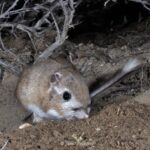
Continue reading →All 20 kangaroo rat species (Dipodomys spp.) den in ground burrows but there is surprising variation in the burrow system from species to species. Of course they differ in terms of entry hole size – larger species generally make larger … Continue reading →