Category Archives: Blog

Black Bear Straddle Marking
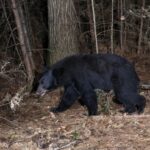
Black bears engage in various behaviors thought to relate to scent communication. As I’ve discussed before, they mark larger trees by rubbing, biting, and clawing at them, and they mark the ground with their feet by as they walk, sometimes … Continue reading →
Trail Camera Noise: Part 2 — Ultrasonic Squeals
Animals are sometimes startled by trail cameras as the cameras are taking photos and videos. Camera noise seems a likely culprit, especially in daytime captures, without the flash. In Part 1 of this two part series, I listened carefully to … Continue reading →
Moose Associations: When Moose Mingle Outside the Breeding Season
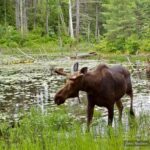
Moose (Alces alces) are the least social members of the deer family in North America. They are often described as “solitary”, except for groups associated with reproduction: mothers with calves, and gatherings during the rut. However, moose sometimes form other … Continue reading →
Trail Camera Noise: Part 1 — Clicks
This post examines noise made by some types of trail cameras to understand which models are more likely to be heard by animals.
Continue reading →How (some) Trail Cameras Fail
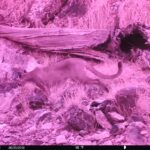
Pink panther caused by stuck IR filter. In this post I look at common camera trap failures, their causes, and fixes.
Continue reading →Bobcat Tracks and Trail Patterns
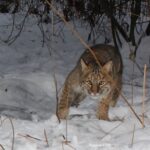
Though the bobcat (Lynx rufus) is common and widespread, it is usually shy and secretive so you are more likely to see its foot prints than the animal itself. Bobcat tracks and trail patterns (also called track patterns) are similar … Continue reading →
Using an Acoustic Logger to Capture Wildlife Sounds
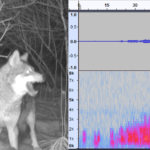
Acoustic loggers are like camera traps, but record only high definition sound. Example of coyote howling, bat feeding buzz and instructions for configuring AudioMoth acoustic logger and processing files.
Continue reading →The Art of the Treeless Set
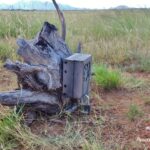
Treeless set for Camera trap set up in prairie habitat. Camera attached to stump root ball
Continue reading →Porcupine Winter Dens – Photos and Videos
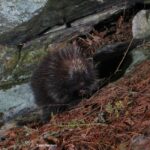
At least in the northern portion of its range, the North American porcupine (Erethizon dorsatum) uses dens in winter for protection from wind and weather. They choose spots near good feeding trees, but they are flexible in terms of den … Continue reading →