New Book: Trail Cameras & Custom Camera Traps: Technology, Ethics & Strategies for Success
We are very excited to release the first book in our new series on camera trapping. You can buy the book here: Trail Cameras & Custom Camera Traps: Technology, Ethics & Strategies for Success.
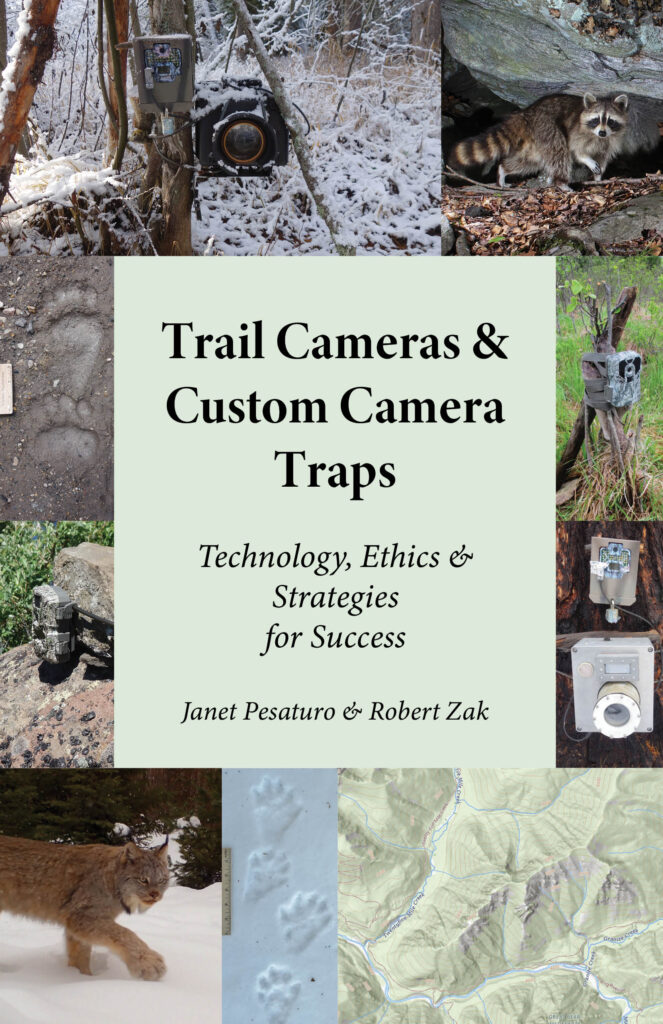
This first book in the series covers the technology of camera traps, techniques for successfully deploying and servicing them, ethical and legal issues, the use of online mapping tools to find promising camera sites, and the use of wildlife tracking skills to fine tune camera placement.
We focus on practical advice with examples, photographs, and illustrations to put this advice into context.
This book is broadly useful for any camera trapping location. Later books in the series will provide detailed camera trapping advice for select mammals found in Western North America.
Table of Contents
Here is a sampling of the books contents by chapter. Each of these is richly illustrated with color photographs and diagrams. In addition, we provide an extensive bibliography containing references and resources for each chapter.
Camera Traps: Trail Cameras and DSLRs
This chapter covers many technical details about trail cameras and DSLR camera traps. Our goal in this chapter is to give the reader enough of an understanding of how trail cameras and customs camera traps work o get the most out these devices, while avoiding common pitfalls. We cover the seemingly mysterious behavior of PIR triggers sensors, power sources, SD card, and security equipment. There is an extensive section on custom DSLR and mirrorless camera traps, as well.
Deploying and Servicing
Once you have a trail camera, or maybe several, the next step is to deploy and later service them in the field. This chapter focuses on the mechanics of camera trap deployment. It includes a discussion of general locations, as well as a detailed guide of reliably setting up, configuring, and servicing trail cameras and DSLR camera traps.
Legal and Ethical Issues
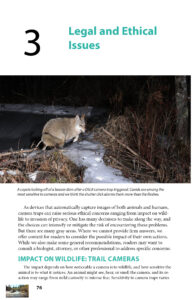
As devices that automatically capture images of both animals and humans camera traps can raise serious ethical concerns ranging from impact on wildlife to invasion of privacy. In this chapter, we consider these issues, offering guidelines where possible, and context for readers to consider the possible impact of their own actions.
Making Use of Captures
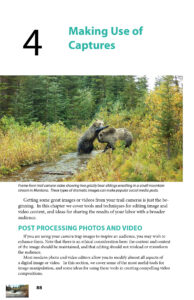
Getting some great images or vides from trail cameras is just the start. In this chapter, we cover tools and techniques of redding images and video content, and ideas for sharing the results of your labor with a broader audience.
Reading the Landscape
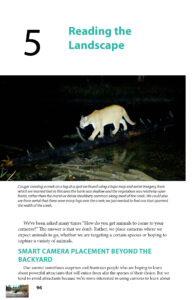
We’ve been asked many times, “How do you get animal to come to your cameras?” The answer is that we don’t. Rather, we place cameras where we expect animals to go, whether we are targeting a certain species of going to capture a variety of animals. This chapter covers the “broad search” and provides suggestions for using satellite and mapping resources to find likely areas camera trapping.
Introduction to Wildlife Tracking
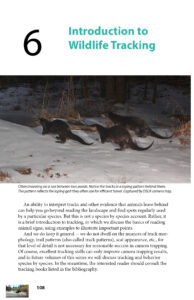
An ability to interpret tracks and other evidence that animals leave behind can help you go beyond reading the landscape and find spots regularly used by a particular species, This chapter gives a brief, general introduction to tracking. We discuss the basics of reading animal signs, using examples to illustrate important points.
Even Video
Our book even features a pair of video clips — presented as flip art in the lower left and lower right corners. Check out the lion family passing by, and a moose mom and her calf splashing through a pond and let us know what you think!
Advance Praise
Drawing on decades of field experience, authors Janet Pesaturo and Robert Zak present a clear, practical guide to wildlife camera trapping, from commercial trail cameras to advanced DSLR setups. They share proven strategies for selecting camera sites, interpreting wildlife tracks and behavior, and maintaining ethical field practices that respect animals and their habitats. This book is an invaluable resource for researchers, conservationists, and anyone committed to using camera traps responsibly to photograph wildlife.
— Tim Manley, retired Grizzly Bear Specialist; trail camera developer and user since 1985
“This book is full of crystal-clear explanations of how automated cameras work, how to choose which ones to use, where to put them and how to set them up, and how to handle the videos and images they produce. It goes far beyond the basics, and will help both recreational and professional camera trappers to get the most out of the cameras they use. The technical sections should be set readings for tertiary courses about wildlife and conservation.”
–Peter Apps, Senior Researcher at Botswana Predator Conservation https://www.researchgate.net/profile/Peter-Apps
“Trail Cameras and Custom Camera Traps is an excellent resource for beginners and experts alike who are looking to hone their craft. Janet and Robert have become widely known within the camera trapping community for gathering high-quality footage of rare wildlife and their behaviors while still considering ethics that minimize impacts to the animals themselves. As an amateur camera trapper, I’ve often reached out to Janet and Robert with questions and for troubleshooting advice, as they have established themselves as leaders in the field. I’m ecstatic that they have published this book as a valuable learning resource for others like myself.”
–Luke Lamar, managing director at Swan Valley Connections
Excited to read your book however there was no link throughout this email to order it.
The link was not in the email but it is in the first paragraph of this post.
That is really exciting! I do enjoy your Facebook posts.